A few simple steps — a plan, a kit, an understanding of your risks, and the right alerts — can protect your household when it matters most.
Disasters can happen at any time—often with little warning. In Christian County, hazards like tornadoes, severe storms, flooding, and winter weather can impact our community. Taking simple steps now can make a major difference in your safety and recovery.
Preparedness starts with you. By planning ahead, building a kit, and staying informed, you can protect yourself and your family during an emergency.
Emergency preparedness can be broken down into four steps:
Every household should have a plan for what to do during an emergency. Your plan should include:
Download our Family Disaster Plan Template to get started.
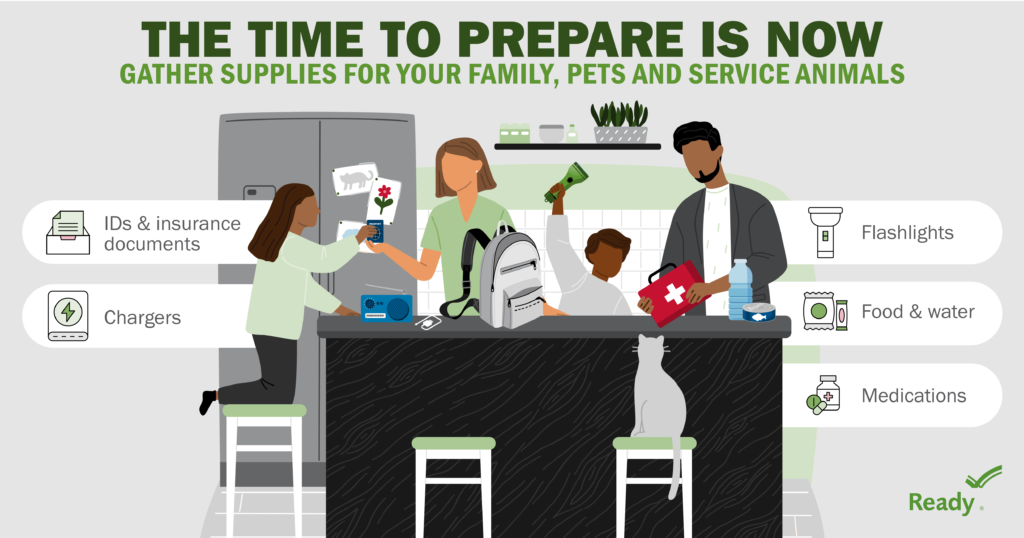
After a disaster, you may need to be self-sufficient for at least 72 hours. A basic emergency kit should include:
Understanding the hazards most likely to affect Christian County helps you prepare effectively. Common local hazards include:
Learn what to do before, during, and after each type of disaster by visiting the hazard information pages.
Receiving timely alerts and warnings is critical. Christian County uses Smart911 to notify residents of emergencies, weather hazards, and important public safety information.
Sign up today to receive alerts:
Register at Smart911 and customize how you receive alerts.
Also consider:
Be sure to account for:
Christian County also offers a Special Needs Registry to assist responders during emergencies.
Prepared communities are stronger communities. You can:
Community involvement strengthens overall resilience and response capabilities.
During an emergency:
After a disaster:
Emergencies don’t wait—and neither should you. Taking a few steps today can protect your life, your family, and your property tomorrow.
If you need help building a plan or preparing your household, contact Christian County Emergency Management for guidance and resources.